
Every day, children use adaptive skills to complete routines like getting dressed, brushing their teeth, preparing a snack, following directions, and participating at school. When these everyday tasks become challenging, they can affect a child’s confidence, independence, and ability to participate at home and in the community. Adaptive Skills within ABA Therapy help children build these practical daily living skills through individualized, evidence-based instruction. At Achievement Balance, we partner with families throughout Flower Mound and the greater DFW area to develop adaptive skills that support greater independence and long-term success.
What Are Adaptive Skills and Why Are They Crucial for Independence?
Adaptive skills are the practical, everyday abilities a person needs to function safely, effectively, and independently at home, school, and in the community. In ABA therapy, these skills are systematically broken down, taught, and reinforced to help children with autism thrive in their daily lives. Achievement Balance focuses on these skills because they are the true building blocks of a self-sufficient and fulfilling life, directly impacting a child’s ability to engage with their environment and peers. Our tailored programs help children across the different levels of autism develop these crucial life skills.
These skills go far beyond academics; they are the “how-to” of navigating the world. They generally fall into three core categories of adaptive behavior:
- Conceptual Skills: This includes language and literacy, understanding concepts of money, telling time, and basic number sense. For example, learning to identify numbers on a clock or understanding the value of different coins.
- Social Skills: These are the skills needed for interpersonal relationships, social problem-solving, following rules, and understanding social cues. This might involve learning to share toys or initiating a greeting.
- Practical Skills: This category covers personal care (dressing, hygiene), safety awareness, using transportation, and managing daily routines and chores. Examples include brushing teeth independently or safely crossing the street.
Deficits in these areas can directly impact a child’s safety, their ability to form meaningful relationships, and their future opportunities for independent living. By targeting these skills, we create a foundation for lifelong growth, helping children in the DFW area achieve greater autonomy.
How Achievement Balance Uses ABA to Teach Adaptive Skills
Achievement Balance teaches adaptive skills by first conducting a detailed assessment to identify a child’s specific needs, then creating an individualized treatment plan through ABA therapy in Flower Mound that uses evidence-based strategies such as positive reinforcement and Natural Environment Teaching (NET) to build skills in real-world settings. Our approach is not one-size-fits-all; it is a collaborative partnership with your family to achieve meaningful outcomes. We have seen children in Flower Mound and surrounding DFW communities make significant strides in their adaptive capabilities through consistent, individualized plans developed by the Achievement Balance team.
The Assessment: Creating a Clear Starting Point
The journey begins with a comprehensive assessment, which is a collaborative first step, not a test. Our therapists use standardized tools, alongside direct observation to identify the specific skills that will make the biggest positive impact on your child’s and family’s quality of life. This process provides a baseline for measuring progress, tailoring the evaluation to your child’s age and developmental stage. At Achievement Balance, understanding the family’s daily rhythms and challenges is just as crucial as the formal assessment data. Learn more about our comprehensive assessment process by contacting our Flower Mound office today.
Individualized Goal Setting for Meaningful Progress
Based on the assessment, we work with you to set goals that are tailored to your child’s age, abilities, and family priorities. These goals are not generic. They are specific, measurable, and functional, addressing real-life needs. For school-aged children, these objectives are often crucial for developing effective strategies that align therapeutic work with educational progress, and can often overlap with skills addressed in Executive Functioning skills for children. The Achievement Balance team finds that the most successful goals are the ones co-created with parents, focusing on reducing a specific daily friction point, like getting out the door for school, or improving independent play.
Natural Environment Teaching (NET): Learning Where it Counts
A core component of our ABA Therapy in Flower Mound programs is Natural Environment Teaching (NET). Instead of just using flashcards at a table, our therapists in Flower Mound and the greater DFW area teach skills within the child’s natural environment. For example, an Achievement Balance therapist might guide a child to request a specific toy during playtime in their living room, or practice identifying healthy snack options while grocery shopping with a parent. This makes the skill more functional and helps the child generalize it to other settings, ensuring the learning is applicable beyond the therapy room.
What Does Adaptive Skills Training Actually Look Like at Achievement Balance?
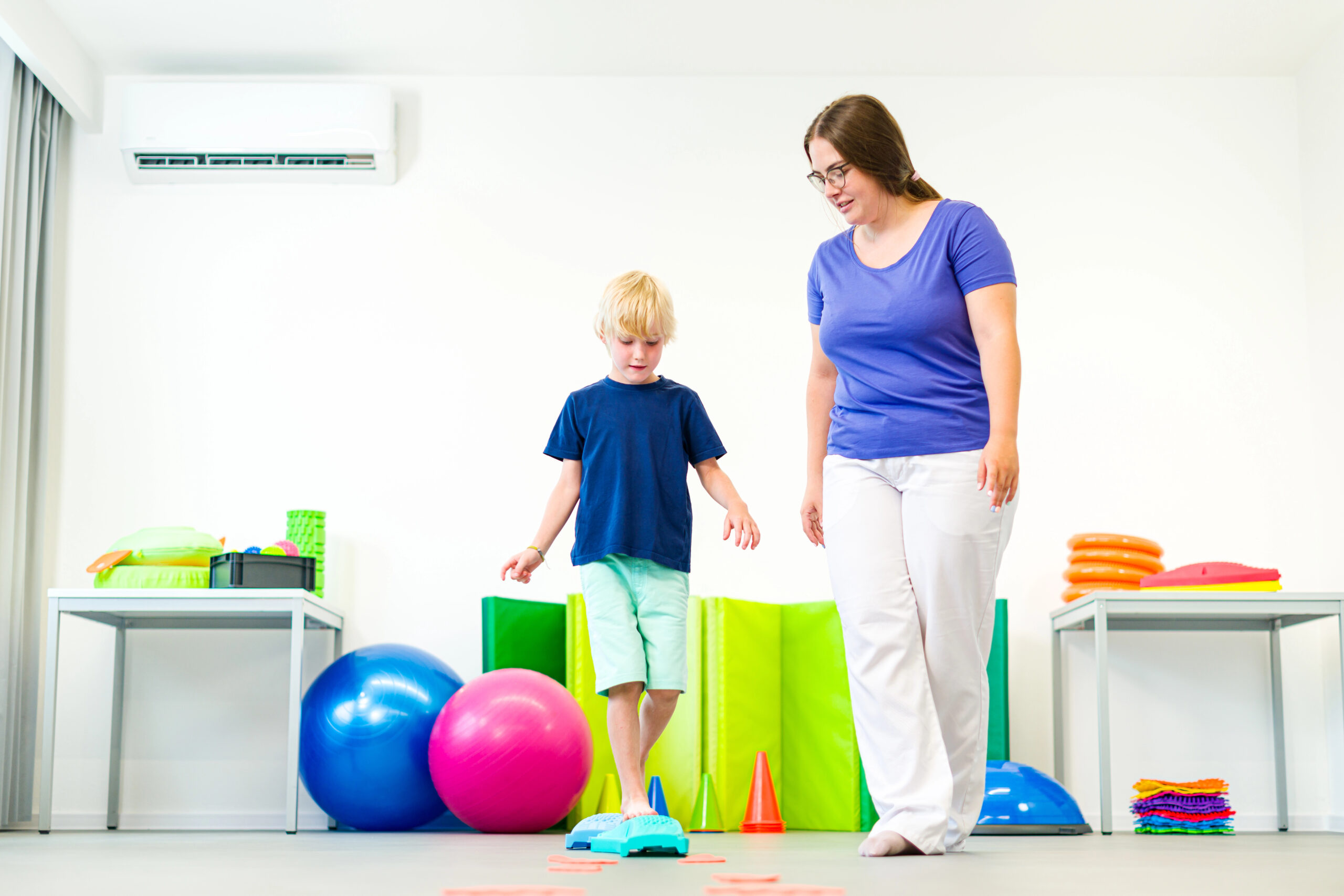
Adaptive skills training at Achievement Balance involves structured and naturalistic activities designed to teach specific daily living skills. This could look like a therapist guiding a child through a tooth-brushing routine using a visual schedule for children, practicing how to order food at a local restaurant, or learning to safely cross a street in their own neighborhood. The goal is to make learning functional and engaging, directly addressing the challenges your child faces every day.
From Morning Routines to Community Safety: Real-World Skill Building
Our therapists help children master a wide range of skills that build confidence and reduce dependence on caregivers. Here are just a few examples of the practical skills we target:
- Personal Hygiene: Brushing teeth, washing hands, getting dressed independently, managing toileting routines.
- Household Chores: Setting the table for dinner, putting away toys, helping with laundry, making their bed.
- Safety Skills: Identifying “strangers,” knowing a parent’s phone number and address, looking both ways before crossing the street, understanding basic emergency procedures.
- Community Skills: Ordering at a cafe, using a library card, waiting in line at the grocery store, navigating public spaces respectfully.
We integrate various activities into therapy sessions and share strategies with parents, ensuring consistent practice at home and in the community.
Clarifying the Difference: Social Skills vs. Adaptive Skills
Parents often wonder about the difference between social and adaptive skills. While they are related, they target different areas of development, both crucial for a child’s overall independence. Understanding this distinction helps clarify therapeutic goals and expectations.
| Feature | Social Skills | Adaptive Skills |
|---|---|---|
| Primary Focus | Interacting with others, understanding social cues, building relationships. | Daily living, personal care, practical problem-solving, functional independence. |
| Examples | Initiating conversations, sharing, turn-taking, understanding emotions, making eye contact, responding to names. | Dressing, hygiene, meal preparation, money management, safety awareness, using public transportation. |
| Goal | Enhance meaningful social connections and navigate social environments effectively. | Enable self-sufficiency in daily routines and practical life situations. |
| Overlap | Social skills are a distinct domain of adaptive behavior, crucial for navigating social interactions. | Many adaptive skills (like ordering food) require underlying social interaction skills. |
| Achievement Balance | We address social skills as part of a comprehensive ABA program, often in group settings or through NET. | Our programs systematically teach practical adaptive skills, integrating social elements where appropriate. |
Primary Focus
Examples
Goal
Overlap
Achievement Balance
Common Mistakes Parents Make When Trying to Teach Daily Living Skills
Teaching adaptive skills can be challenging, and even well-intentioned parents can sometimes fall into common traps that hinder progress. At Achievement Balance, we partner with families to avoid these pitfalls, ensuring a more effective and less frustrating journey toward independence.
- Expecting Too Much, Too Soon: It is easy to overestimate a child’s current abilities or rush through steps. Adaptive skills are built incrementally. Trying to teach a complex skill like cooking a meal before mastering basic steps like following directions or identifying ingredients can lead to frustration for both parent and child. Our therapists help set realistic, achievable goals, drawing on years of experience with DFW children.
- Inconsistency in Approach: One day you might prompt a child to brush their teeth, the next you do it for them. This inconsistency confuses the child and makes skill acquisition much harder. ABA therapy emphasizes consistent routines and reinforcement across all environments. We provide parents with clear, actionable strategies to maintain consistency.
- Lack of Generalization Training: A child might learn to make their bed perfectly in one setting, but struggle to do it in another. Without explicit training to generalize skills across different environments, the learning remains isolated. Achievement Balance therapists integrate generalization strategies from the outset, ensuring skills are truly functional wherever your child goes.
Build Adaptive Skills Within ABA Therapy at Achievement Balance
Adaptive skills within ABA therapy can help children develop the practical abilities needed for greater independence at home, school, and in the community. At Achievement Balance, our individualized ABA programs focus on teaching meaningful daily living skills that align with each child’s strengths, challenges, and family goals.