
Signs of Autism in 3-Year-Olds: What to Look for and How to Get Help
Spotting the early signs of autism in toddlers age 3 can open the door to tailored support and better developmental outcomes. These early years are a critical window for intervention, making it essential to understand what to look for and how to respond. If you’re unsure about your child’s behavior or milestones, this guide will help you identify potential signs and take the right steps for their well-being.
Autism Spectrum Disorder (ASD) is a broad and nuanced condition, meaning every child’s experience is unique. Some children may require significant support, while others develop independence with minimal assistance. Understanding these differences can help you make informed decisions for your child.
Understanding Autism Spectrum Disorder (ASD)
You might have heard the term Autism Spectrum Disorder (ASD) but aren’t exactly sure what it means. Autism is a developmental condition that affects how a person communicates, interacts socially, and behaves. The term “spectrum” indicates that autism presents differently in every individual, with varying levels of support needs.
What Does “Spectrum” Mean?
The spectrum includes:
- Level 1 Autism: Mild symptoms where individuals may require minimal support.
- Level 2 Autism: Moderate symptoms requiring more substantial help, especially in communication and social interaction.
- Level 3 Autism: Severe symptoms needing intensive support for daily functioning.
Other Challenges That May Co-Exist with Autism
Autism often co-occurs with other developmental or medical conditions, such as:
- Sensory Processing Disorder (SPD): Heightened or diminished responses to sensory input, like light, sound, or touch.
- ADHD: Difficulty focusing or hyperactivity that overlaps with autism symptoms.
- Anxiety Disorders: Many children with autism experience heightened levels of anxiety, particularly in unfamiliar or unpredictable environments.
How Common is Autism?
According to the CDC, 1 in 36 children in the United States is diagnosed with autism. Boys are four times more likely to be diagnosed than girls, although girls may present different symptoms and are often underdiagnosed.
Common Signs of Autism in Toddlers Age 3
By the time children are 3 years old, they typically reach important developmental milestones. They begin forming sentences, engaging in imaginative play, and showing interest in the world around them. However, for children with autism, these milestones may appear differently.
Speech and Language Development
One of the earliest signs of autism is delayed or atypical speech development:
- Examples of Delayed Speech: A 3-year-old may use fewer than 50 words or struggle to put two words together into a simple sentence.
- Regression in Speech: Some children may initially develop speech but lose the ability to say words or phrases they previously used.
- Echolalia: Instead of responding to a question, a child might repeat the question back verbatim, such as hearing, “Do you want a snack?” and replying, “Do you want a snack?”
Social Interaction Challenges
Social development in children with autism can look different:
- Limited Eye Contact: Some children may glance at a caregiver briefly but struggle to sustain eye contact.
- Preference for Solitude: A 3-year-old might enjoy playing alone and show little interest in group activities or parallel play.
- Lack of Joint Attention: This includes not pointing to share interest in an object, such as a passing plane or a colorful toy.
Repetitive Behaviors
Repetitive movements or actions provide comfort and predictability for children with autism. Examples include:
- Hand-flapping when excited or upset.
- Rocking back and forth, particularly during moments of stress.
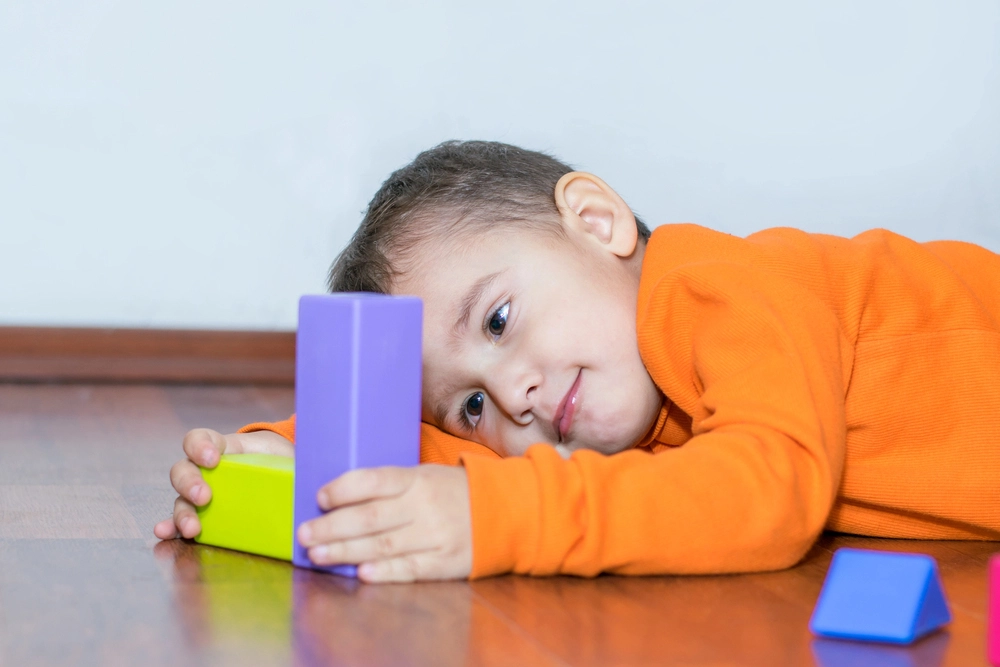
- Insisting on arranging toys or objects in a specific order, such as lining up cars or blocks.
Fixation on Specific Interests
Children with autism often develop intense interests:
- For example, they might spend hours spinning the wheels on a toy car or watching the same video repeatedly.
- These fixations can be a source of joy but may also limit their engagement with new experiences or toys.
Behavioral Signs of Autism in 3-Year-Olds
Understanding behavioral signs can offer additional insights into a child’s unique needs.
Sensory Sensitivities
Children with autism often experience heightened or diminished responses to sensory input:
- Examples of Over-Responsive Behavior:
- Covering ears when hearing loud noises like a vacuum cleaner.
- Avoiding certain textures in food or clothing.
- Under-Responsive Behavior:
- Seeking intense sensory input, such as spinning or bumping into objects.
- Appearing indifferent to pain or temperature changes.
Resistance to Change
Routine provides a sense of security for many children with autism:
- Meltdowns or distress may occur when a routine is disrupted.
- They may insist on specific rituals, such as using the same cup for drinking or following a set sequence when getting dressed.
Social Interaction and Communication: What to Watch For
Social interaction is a core challenge for children with autism. While every child develops at their own pace, understanding the nuances of these difficulties can help parents identify potential concerns.
Emotional Responses
Children with autism may struggle to express or interpret emotions:
- They might not mirror a smile or respond to a parent’s laughter.
- In group settings, they may appear withdrawn or overwhelmed by the emotions of others.
Imaginative Play
Imaginative play is often limited in children with autism:
- Instead of pretending to cook with a toy kitchen, they might focus on opening and closing the oven door repeatedly.
When Should You Seek Professional Help?
Early intervention is critical for children with autism. If you notice potential signs, it’s important to seek help promptly.
Developmental Screenings
Developmental screenings, often performed by pediatricians, can identify areas where your child may need support. Tools like the Modified Checklist for Autism in Toddlers (M-CHAT) are commonly used.
Specialist Evaluations
An evaluation by a developmental pediatrician, psychologist, or speech therapist may include:
- Observing your child’s behavior.
- Assessing developmental milestones.
- Interviews with parents or caregivers to understand the child’s history.
What to Expect During a Diagnosis
- Tests like the Autism Diagnostic Observation Schedule (ADOS) provide structured observations of communication, play, and social behavior.
- A comprehensive evaluation may include hearing and vision tests to rule out other causes of developmental delays.
The Benefits of ABA and CBT for Children with Autism
Both Applied Behavior Analysis (ABA) and Cognitive Behavioral Therapy (CBT) can significantly improve the quality of life for children with autism. These therapies focus on different aspects of development and behavior.
ABA: Breaking Down Skills
is highly structured and individualized:
- It involves breaking tasks into small, manageable steps.
- Reinforcement strategies reward positive behavior, such as using words to request a toy.
CBT: Teaching Emotional Regulation
focuses on helping children recognize emotions and respond appropriately:
- For younger children, CBT is often play-based to help them process emotions and develop problem-solving skills.
- Techniques like visual aids or role-playing can make CBT more accessible for 3-year-olds.
Debunking Myths About Autism
Understanding autism means addressing misconceptions:
- Myth: Autism is caused by vaccines.
- Fact: Extensive research has debunked this myth, and major health organizations confirm no link between vaccines and autism.
- Myth: Children with autism can’t form meaningful relationships.
- Fact: Children with autism form strong bonds with family and friends, though they may express affection differently.
How to Support Your Child
Parents and caregivers play a vital role in a child’s development. Here’s how to provide meaningful support:
- Educate Yourself: Learn about autism through reliable resources like Autism Speaks or the CDC.
- Create a Routine: Consistency can help reduce anxiety and improve behavior.
- Celebrate Small Wins: Recognize and encourage every milestone your child achieves, no matter how small.
Final Thoughts
Understanding the signs of autism in toddlers age 3 is the first step toward providing the support they need. Autism is not a limitation but a different way of experiencing the world. Early detection, tailored therapies like ABA and CBT, and a strong support network can make a significant difference in your child’s journey.
At Achievement Balance, we provide personalized ABA, CBT, speech, and physical therapy to help children thrive. With a compassionate, family-oriented approach, we promote skills that enhance interaction at home, school, and in the community. Contact us at (972) 410–5297 or email inquiry@achievement-balance.com to learn how our tailored programs can support your child’s growth.