
The Role of Occupational Therapy in Enhancing Daily Living Skills for Children with Autism
Understanding the Power of Therapy in Autism Support
Raising a child with autism is a journey filled with both joy and unique challenges. For many families seeking While well-known services like occupational therapy is often the missing link that helps children apply those skills in real-world settings.
What Is Occupational Therapy and Why Is It Important?
Occupational therapy, often referred to as OT, is a therapeutic approach that helps individuals of all ages participate in the activities (or “occupations”) that are meaningful to them. For children with autism, these activities often include basic self-care, school tasks, play, and social interactions.
How Occupational Therapy Differs from ABA and Speech Therapy
- ABA therapy primarily targets behavior by using reinforcement strategies to teach and shape desired actions.
- Speech therapy focuses on communication—verbal, nonverbal, and social language skills.
- Occupational therapy, in contrast, targets functional skills needed to participate in daily life, such as dressing, eating, holding a pencil, and coping with sensory inputs.
When provided together through how they behavehow they communicate, and how they function.
Fostering Independence Through OT
The ultimate goal of occupational therapy is to support children in becoming as independent as possible. This can mean teaching a child how to zip their coat, hold a spoon, regulate their emotions, or handle sensory discomforts like loud sounds or clothing textures. , occupational therapists work closely with ABA and speech therapists to create personalized, goal-driven programs that make independence not just a dream—but a reality.
Key Daily Living Skills Addressed by Occupational Therapy
Children with autism often struggle with everyday activities that neurotypical children pick up naturally. Occupational therapy offers structured, guided support to help them gain mastery over these tasks.
Self-Care Skills
- Dressing independently
- Brushing teeth and washing hands
- Managing buttons, zippers, or shoelaces
- Using the restroom without assistance
These foundational tasks are essential for both school readiness and home life. With
Fine Motor Skills
Fine motor delays are common in children with autism. OT helps by:
- Teaching how to hold a pencil or crayon properly
- Practicing scissor skills and writing
- Improving hand strength for gripping utensils or tying shoelaces
Sensory Integration
Many children with autism experience Occupational therapists use sensory integration therapy to help children:
- Tolerate grooming and hygiene routines
- Stay calm in noisy or crowded environments
- Adjust to changes in clothing or food textures
Social and Play Skills
While social skills are often addressed in ABA and speech sessions, occupational therapy brings a unique layer:
- Encouraging imaginative play
- Facilitating turn-taking and cooperative activities
- Teaching self-regulation during group play
When delivered as part of an plan, children gain not only communication tools but also the physical and emotional readiness to interact with others confidently.
How Occupational Therapy Complements ABA and Speech Therapy
The beauty of a multidisciplinary approach lies in its synergy. When therapies are not siloed but work collaboratively—as they do in a —the benefits multiply.
Where Therapies Overlap
- A child learning to ask for help in speech therapy may also be working on the motor skill of reaching and pointing in OT.
- ABA may teach a behavior like brushing teeth; OT ensures the child can physically perform the action comfortably.
- Speech therapy may help with expressing feelings, while OT teaches how to recognize and manage those feelings through sensory regulation.
Reinforcing Each Other
Consider a child struggling with transitions:
- ABA helps with understanding and following transition cues.
- Speech therapy aids in expressing discomfort or asking for a break.
- Occupational therapy supports sensory regulation so the child doesn’t feel overwhelmed during the change.
This cohesive ABA speech and occupational therapy model ensures children receive wraparound support across all areas of development.
What to Expect in an Occupational Therapy Session
like Achievement Balance in Flower Mound, TX, occupational therapy sessions are customized to each child’s goals, abilities, and interests.
Structure of a Typical Session
- Initial warm-up: May involve sensory activities like swinging, bouncing, or tactile play to prepare the body for focus and learning.
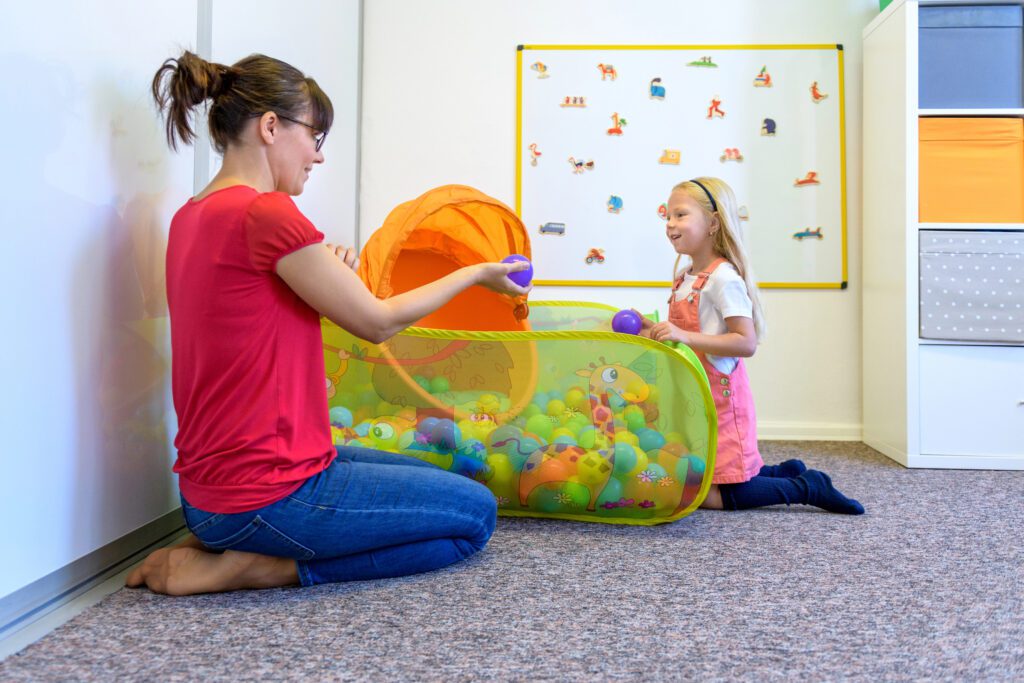
- Skill-building activities: Could include games that target hand-eye coordination, puzzles to improve fine motor control, or dress-up to practice self-care.
- Cool-down and transition: Ending with calming techniques or routines to help the child regulate after engaging activities.
Play-Based, Goal-Oriented Approach
Therapists make sessions fun yet purposeful, using a child’s interests (cars, dolls, animals) to motivate practice. Parents are often involved or given strategies to reinforce learning at home, creating consistency across environments.
Signs Your Child May Benefit from Occupational Therapy
Parents often wonder, “How do I know if my child needs OT?” Here are some signs to look out for:
Motor and Physical Challenges
- Trouble holding pencils or feeding themselves
- Difficulty with dressing or grooming
- Seeming unusually clumsy or uncoordinated
Sensory Processing Issues
- Overreaction to sounds, lights, or touch
- Extreme pickiness with clothing or food textures
- Avoidance of certain movements (swings, stairs, etc.)
Self-Care and Routine Struggles
- Resistance or anxiety around brushing teeth or bathing
- Trouble following daily routines
- Meltdowns during transitions or tasks
If you’ve noticed any of these signs, especially alongside communication or behavioral challenges, a combined program may be the right step forward.
Finding the Right Occupational Therapy Program
Choosing the right therapy center can make a world of difference. Here’s what to consider:
Key Features to Look For
- Therapists with pediatric and autism specialization
- A facility that offers integrated care under one roof
- Individualized treatment plans with clear, measurable goals
- A warm, sensory-friendly environment
Why a Comprehensive Autism Center Matters
to provide coordinated care. This multidisciplinary model ensures no aspect of your child’s development is overlooked.
How Parents Can Support at Home
- Follow the home strategies given by your child’s therapist
- Create consistent routines that mimic therapy goals
- Celebrate small wins—they add up!
- Communicate regularly with the therapy team to track progress
To Sum Up
 Occupational therapy is a game-changer in helping children with autism not just cope—but thrive. When delivered alongside ABA therapy and speech therapy, it lays the foundation for real-world success: brushing teeth without meltdowns, holding a pencil with confidence, or participating in a birthday party with joy. These are more than just skills—they’re the building blocks of independence. If you’re in the Flower Mound, TX area and looking for a trusted comprehensive autism center, Achievement Balance offers a nurturing environment with expert therapists who specialize in ABA speech and occupational therapy. Whether your child is just beginning their therapy journey or needs continued support into adolescence, we’re here to help every step of the way. Please reach out today to schedule a consultation—we’re ready to support your child’s growth, one skill at a time. Call Us: (972) 410 – 5297
Email Us: info@achievement-balance.com
Visit: https://achievement-balance.com